
Hype, Pilot, ROI: What Health Systems Get Wrong When They Buy AI
Dr. Alan Young has sat in every seat of an AI deal. His view: the technology is often fine, and the buying is broken.

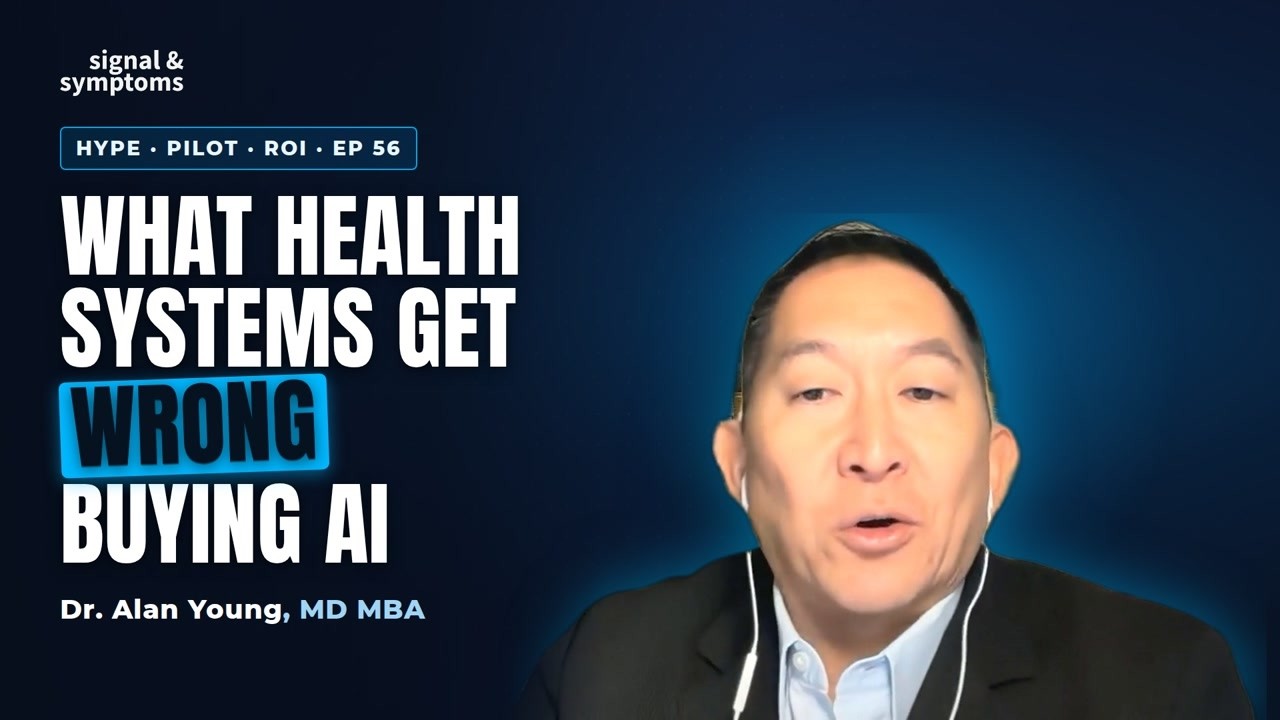
Ask why so many health-system AI deals disappoint and the usual answer is “the technology was not ready.” Dr. Alan Young has a more uncomfortable answer: the technology is often fine; the buying is broken. He would know. He has held the vendor’s chief-medical seat, the consulting seat, the health-system operator seat, and the buyer-side committee chair, so he can say plainly what each of those seats actually optimizes for.
Now with Evidently, a clinical data intelligence platform, Dr. Young joins host Dr. Junaid Kalia with co-hosts DR GPT™ Harvey Castro and Dr. Isha Mannering for a candid look at the real mechanics of buying AI.
“You can have a trillion teraflops of data, but if twenty percent is inaccurate, incomplete, or partly hallucinated, what is that dataset actually worth?” Dr. Alan Young
His first point is the one finance teams feel last and hardest: the cost nobody budgets for. The SaaS subscription is the visible number. The compute, the cloud, the data centers, the integration, the ongoing operations, that is the iceberg beneath it, and it routinely blindsides organizations and sours them on the next investment. His second point is about incentives. Executives make buy decisions on the financials, and when the pressure hits, they cut headcount, because an FTE is an expensive line item. But cut too far and you cannot run as many surgeries, see as many patients, or hold the patient experience together. The money flows through healthcare, Dr. Young notes, but the people capturing it are not always the best stewards of it, and reinvestment is where the system falls short.
Junaid reframes the ROI conversation in a way every CFO should hear. Beyond hard-dollar savings there is “soft ROI”: spend two million to keep one neurocritical-care, stroke, and epilepsy-certified specialist, because there are only about twenty such physicians to replace him, and the search alone runs close to a million. Dr. Young adds the data-veracity problem that undermines every model downstream: volume is meaningless if the data is wrong, and the real work, the work Evidently is built for, is reading structured and unstructured records and surfacing only what a clinician actually needs to decide.
It does not end cynical. The panel sees real momentum: ambient AI has created a “pull-through” effect, with clinicians now expecting, and choosing employers for, tools that are already proven to help. Junaid describes the cost of delivering AI trending toward zero and consumer expectations rising to meet it (if a tire shop can just handle it in an app, so should healthcare). Isha wants the obvious human payoff: stop making patients repeat their history to everyone. And Dr. Young closes on the prize, using all of this to deliver a basic level of care to everyone and finally run a health-care system rather than a sick-care one.
Connect with us
Dr. Junaid Kalia, Neurocritical Care Specialist, Founder of Savelife.AI™
DR GPT™ Harvey Castro, ER Physician, #DrGPT
Edward Marx, CEO, Advisor
Originally published on my Substack. For board members weighing an AI purchase, see my AI governance framework or explore my healthcare AI keynotes.